
Advanced Materials for Aircraft represent a crucial leap in aerospace engineering, transforming how we design and manufacture aircraft. These innovative materials not only enhance aircraft performance but also pave the way for more fuel-efficient and sustainable aviation solutions. As we delve into the world of advanced materials, we’ll explore their significance, evolution, and the various types that are reshaping the skies.
From composites that combine lightness and strength to cutting-edge alloys and ceramics, the landscape of aircraft materials has evolved dramatically. Understanding the properties that make these materials suitable for aviation applications is essential for appreciating their role in modern aircraft design.
Overview of Advanced Materials for Aircraft
Advanced materials play a critical role in the aerospace industry by enhancing the performance, efficiency, and safety of aircraft. As the demand for more fuel-efficient and environmentally friendly aviation solutions increases, the significance of advanced materials becomes even more pronounced. These materials not only contribute to weight reduction and aerodynamic performance but also improve overall structural integrity and resistance to extreme conditions.The evolution of material science in aircraft design has transformed the industry significantly over the decades.
Early aircraft primarily utilized wood and metal, but advancements in technology and a deeper understanding of material properties have led to the incorporation of composite materials and alloys. This transition has enabled engineers to create lighter, stronger, and more resilient aircraft. The integration of materials like carbon fiber reinforced polymers (CFRP) has allowed for significant weight savings and fuel efficiency improvements, showcasing the dynamic nature of material innovation in aviation.
Key Properties of Materials Suitable for Aircraft Applications
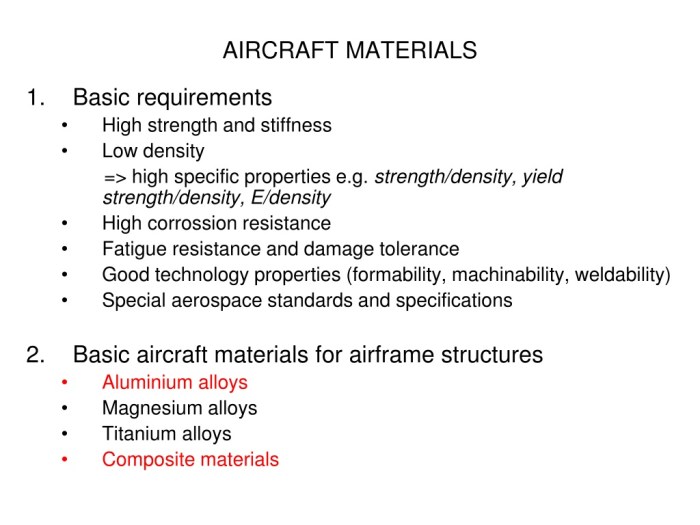
In the quest for optimal performance in aircraft design, certain material properties are paramount. These properties determine the suitability of a material for various components of an aircraft. The following are critical attributes that advanced materials must possess:
- Lightweight: The reduction of aircraft weight directly impacts fuel efficiency and payload capacity. Materials such as aluminum and advanced composites offer the necessary strength while minimizing weight.
- High Strength-to-Weight Ratio: Materials need to withstand the stresses and strains encountered during flight while being lightweight. This ratio is crucial for both structural components and aerodynamic surfaces.
- Corrosion Resistance: Given the harsh conditions that aircraft face, materials must be resistant to corrosion caused by exposure to moisture, humidity, and other environmental factors.
- Thermal Stability: Materials should maintain their mechanical properties across a range of temperatures, especially for components exposed to extreme heat, such as engine parts.
- Fatigue Resistance: Repeated stress cycles can lead to material fatigue. High fatigue resistance ensures the longevity and safety of aircraft components.
- Impact Resistance: Materials must be able to withstand impacts, such as bird strikes or runway debris, without sustaining critical damage.
The selection of materials with these properties enhances the overall safety, efficiency, and performance of modern aircraft, demonstrating the importance of advanced materials in the aerospace sector. The ongoing research and development in material science continue to push the boundaries of what is possible in aviation design.
Types of Advanced Materials Used in Aircraft
Advanced materials play a crucial role in enhancing the performance, efficiency, and safety of modern aircraft. Through the integration of advanced materials, aircraft manufacturers have been able to achieve significant weight reductions, improve fuel efficiency, and enhance the overall durability of their fleets. This section delves into the various types of advanced materials, including composite materials, metallic alloys, and ceramic matrix composites.
Composite Materials and Their Applications
Composite materials are engineered from two or more constituent materials with significantly different physical or chemical properties. The resulting material exhibits characteristics that are superior to those of the individual components. In the aviation industry, composites are primarily used for their lightweight and high-strength properties. Key applications of composite materials in aircraft include:
- Airframe Structures: Composites are widely used in fuselages and wings, providing a high strength-to-weight ratio that enhances performance and fuel efficiency.
- Interior Components: The use of composites in cabin interiors, such as seat frames and overhead bins, contributes to weight savings and overall design flexibility.
- Propellers and Rotor Blades: In helicopters and some fixed-wing aircraft, composite materials are utilized for blades due to their resistance to fatigue and corrosion.
The incorporation of composite materials has resulted in significant advancements in aircraft design, leading to more fuel-efficient and environmentally friendly operations.
Role of Metallic Alloys in Modern Aircraft Structures
Metallic alloys remain a fundamental component of aircraft structures, providing essential properties such as ductility, strength, and resistance to failure under extreme conditions. The most commonly used alloys in aviation include aluminum, titanium, and steel.Aluminum alloys are particularly favored in aircraft fabrication because:
- Lightweight: Aluminum alloys contribute to reduced aircraft weight, which is crucial for fuel efficiency.
- Corrosion Resistance: These alloys exhibit excellent resistance to corrosion, essential for aircraft operating in varied environmental conditions.
- Cost-Effectiveness: Aluminum is readily available and offers an economical solution for large-scale production.
Titanium alloys are known for their high strength-to-weight ratio and are frequently used in critical applications such as engine components and landing gear.
Ceramic Matrix Composites and Their Benefits
Ceramic matrix composites (CMCs) combine ceramic fibers with a ceramic matrix, offering exceptional thermal resistance and strength at high temperatures. This material is becoming increasingly popular in aerospace applications, particularly in the hot sections of engines.The benefits of ceramic matrix composites include:
- High Temperature Stability: CMCs maintain their structural integrity at elevated temperatures, making them ideal for engine applications.
- Weight Reduction: Compared to traditional metallic materials, CMCs provide significant weight savings, contributing to improved overall aircraft performance.
- Wear Resistance: The inherent hardness of ceramics gives CMCs superior wear resistance, enhancing the lifespan of components.
The integration of ceramic matrix composites into aircraft design not only optimizes performance but also opens the door for future advancements in engine technology.
Manufacturing Processes for Advanced Aircraft Materials
The manufacturing processes for advanced aircraft materials are crucial in ensuring the performance, safety, and efficiency of modern aircraft. These materials, designed to withstand extreme conditions while remaining lightweight, require sophisticated techniques for their production. The choice of manufacturing methods greatly influences the final product’s properties, including strength, weight, and durability.
Additive Manufacturing Techniques for Aircraft Components
Additive manufacturing, commonly known as 3D printing, has revolutionized how aircraft components are produced. This technology allows for the creation of complex geometries that traditional subtractive manufacturing cannot achieve. The primary additive manufacturing techniques employed in the aerospace industry include:
- Fused Deposition Modeling (FDM): Utilizes thermoplastic materials which are heated, extruded, and layered to create components. It’s particularly useful for creating prototypes and functional parts.
- Stereolithography (SLA): Involves curing liquid resin with a UV laser, allowing for high precision and smooth finishes. This method is ideal for producing detailed models and parts.
- Selective Laser Sintering (SLS): Uses a laser to fuse powdered materials, such as nylon or metal, layer by layer. SLS is favored for its ability to produce strong and durable components.
- Direct Metal Laser Sintering (DMLS): A specialized form of SLS, specifically for metals, that creates highly complex parts with excellent mechanical properties. Used for critical components such as turbine blades.
The benefits of additive manufacturing in aerospace include reduced material waste, shorter lead times, and the ability to customize parts easily, which contributes significantly to the efficiency of modern aircraft design.
Fabrication Processes for Composite Materials
Composite materials, made from combining two or more distinct materials, are commonly used in aircraft due to their high strength-to-weight ratio. The fabrication processes for these materials typically include:
- Hand Lay-Up: A manual technique where layers of fibers are placed in a mold and saturated with resin. It’s cost-effective for small production runs and prototypes.
- Vacuum Bagging: An extension of the hand lay-up method, where air is evacuated from the bag to compress the layers and improve the bonding of the resin.
- Resin Transfer Molding (RTM): Involves placing dry fiber preforms in a mold and injecting resin under pressure. This process allows for high-quality parts with uniform resin distribution.
- Autoclave Processing: Utilizes high pressure and temperature in an autoclave to cure composite materials, resulting in superior mechanical properties and reduced voids.
These processes enable manufacturers to create lightweight yet strong components, essential for enhancing fuel efficiency and overall aircraft performance.
Traditional vs. Modern Manufacturing Methods in Aircraft Engineering
The evolution from traditional to modern manufacturing methods has significantly impacted aircraft engineering. Traditional methods, such as machining and casting, have served the industry for decades. These techniques are reliable but often involve extensive material waste and longer production times. In contrast, modern manufacturing methods prioritize efficiency and precision, adopting advanced technologies that minimize waste and production times.
- Machining: A traditional subtractive method involving cutting away material from a solid block. While it ensures high precision, it often results in significant material waste.
- Composite Lay-Up: A traditional technique used for layering materials; it can be labor-intensive and requires skilled labor for effective results.
- Automation and Robotics: Modern methods utilize automated systems for tasks like assembly and inspection, leading to improved accuracy and reduced labor costs.
- Digital Manufacturing: Incorporates CAD/CAM technologies that streamline design and manufacturing processes, allowing for rapid prototyping and customization.
The shift towards modern methods is not just about efficiency; it also focuses on producing safer, lighter, and more efficient aircraft, ultimately enhancing aviation technology and sustainability.
Performance Advantages of Advanced Materials
Advanced materials are game-changers in the aerospace industry, primarily due to their superior performance characteristics compared to traditional materials. The adoption of these materials leads to impressive gains in efficiency, safety, and longevity, which are all critical factors in aircraft design and operation. By focusing on weight-to-strength ratios, thermal and corrosion resistance, and fuel efficiency enhancements, we can better appreciate the transformative impact of advanced materials.
Weight-to-Strength Ratios
When it comes to aircraft design, weight is a critical factor that directly affects performance and fuel efficiency. Advanced materials, such as carbon fiber composites and titanium alloys, provide remarkable strength while significantly reducing weight. For instance, the weight-to-strength ratio of traditional aluminum alloys is around 20,000 psi (pounds per square inch) of tensile strength for every pound of weight.
In contrast, carbon fiber composites can achieve a ratio of 40,000 psi or more. This means that aircraft can be constructed using less material without sacrificing structural integrity, leading to lighter and more efficient designs.
“The use of advanced materials can reduce aircraft weight by as much as 20-30%, resulting in substantial fuel savings.”
Thermal and Corrosion Resistance
Another significant advantage of advanced materials is their superior thermal and corrosion resistance properties. Traditional materials, such as aluminum and steel, are prone to thermal expansion and corrosion in harsh environments. However, advanced materials, like ceramic matrix composites and titanium alloys, can withstand extreme temperatures and resist oxidation.These materials maintain their mechanical performance even at elevated temperatures, which is critical for components exposed to high heat, such as turbine blades.
For example, titanium alloys can endure temperatures of over 800°C without significant degradation, while aluminum alloys begin to weaken at approximately 200°C.
“Advanced materials can withstand environments that would otherwise compromise traditional materials, ensuring longevity and reliability.”
Enhanced Fuel Efficiency
The incorporation of advanced materials into aircraft design has led to significant enhancements in fuel efficiency. Reduced weight from materials like carbon fiber composites allows for lower fuel consumption and longer flight ranges.For example, the Boeing 787 Dreamliner, which utilizes about 50% composite materials by weight, achieves a remarkable 20-25% reduction in fuel consumption compared to similar-sized aircraft. This is not only economically beneficial but also contributes to lower greenhouse gas emissions, making modern aircraft more environmentally friendly.
“Utilizing advanced materials is a crucial step towards more sustainable aviation practices.”
In summary, the performance advantages of advanced materials—ranging from superior weight-to-strength ratios to enhanced resistance against thermal and corrosive environments—play a vital role in the evolution of aircraft design and functionality. These materials not only improve aircraft performance but also contribute significantly to fuel efficiency and sustainability in aviation.
Challenges in the Adoption of Advanced Materials
The integration of advanced materials in aircraft manufacturing presents numerous challenges that need to be navigated. While these materials offer significant benefits, such as weight reduction and improved performance, their adoption is not without hurdles. This section delves into the technical, financial, and regulatory challenges that manufacturers face when incorporating new materials into their aircraft designs.
Technical Challenges in Material Integration
The technical aspect of integrating advanced materials into aircraft involves several intricate challenges. Manufacturers must ensure that these materials can perform effectively under extreme conditions often faced during flight. Key areas of concern include:
- Compatibility with existing manufacturing processes: Advanced materials may not seamlessly fit into traditional manufacturing workflows, requiring modifications or new techniques.
- Material behavior under stress: Understanding how new materials react to various stresses, such as thermal and mechanical loads, is essential for ensuring safety and reliability.
- Durability and maintenance: New materials may have different wear and tear characteristics, which complicates maintenance routines and lifecycle management.
Cost Implications of Advanced Materials
The financial aspect of employing advanced materials in aircraft manufacturing cannot be overlooked. While these materials can offer long-term savings through increased efficiency and reduced fuel costs, initial investments can be significant. Some of the cost-related challenges include:
- High material costs: Advanced materials, such as carbon fiber composites, often come with a premium price tag that can increase overall manufacturing costs.
- Development and testing expenses: Extensive research and testing are required to validate the performance and safety of new materials, leading to additional costs for manufacturers.
- Training and skill development: Workers need to be trained in handling and processing advanced materials, which requires investment in education and training programs.
Regulatory Hurdles Impacting Novel Materials
The aviation industry is heavily regulated, and the introduction of novel materials must comply with rigorous standards. These regulatory hurdles can pose challenges to the adoption of advanced materials. Important considerations include:
- Certification processes: New materials must undergo extensive certification processes, which can be time-consuming and costly, delaying the introduction of new aircraft designs.
- Compliance with safety standards: Manufacturers must ensure that new materials meet stringent safety standards set by aviation authorities, which often require extensive testing.
- Impact of regulatory bodies: Changes in regulations or the introduction of new standards can complicate the integration of advanced materials, requiring manufacturers to adapt rapidly.
“Overcoming these challenges is essential for the successful adoption of advanced materials that can revolutionize aircraft manufacturing.”
Future Trends in Aircraft Materials
The future of aircraft materials is poised for transformative changes that could redefine aerospace engineering. As the aviation industry continues to evolve, emerging materials are being developed that promise enhanced performance, reduced weight, and greater sustainability. This section explores key trends that are likely to revolutionize aircraft design in the coming years.
Emerging Materials in Aircraft Design
A variety of emerging materials are on the cusp of making significant impacts on aircraft design. These materials are characterized by their unique properties and capabilities that surpass those of traditional materials. Key examples include:
- Graphene: Known for its exceptional strength and lightness, graphene is being investigated for use in aircraft structures, which could lead to an overall reduction in weight and improvements in fuel efficiency.
- Carbon Nanotubes: With remarkable mechanical properties and electrical conductivity, carbon nanotubes are paving the way for stronger, lighter components that can withstand extreme conditions.
- Shape-Memory Alloys: These alloys can change shape in response to temperature, enabling innovative mechanisms in aircraft design that enhance functionality.
Impact of Nanotechnology on Advanced Materials
Nanotechnology is making waves in the development of advanced materials for aviation. Through manipulation at the molecular level, nanotechnology enhances material properties, leading to:
- Improved Durability: Nanostructured materials exhibit enhanced resistance to wear and tear, increasing the lifespan of aircraft components.
- Lightweight Composites: The integration of nanomaterials into composites leads to significant weight reduction without compromising structural integrity.
- Enhanced Thermal Properties: Nanotechnology helps in developing materials that can withstand higher temperatures, which is crucial for high-performance aircraft.
Sustainability in Future Aircraft Materials
The push towards sustainability is shaping the future of aircraft materials. As the aviation industry seeks to reduce its carbon footprint, the development of eco-friendly materials is becoming paramount. Key factors include:
- Biodegradable Composites: The research and use of biodegradable materials are gaining traction, providing alternatives to traditional composites that harm the environment.
- Recyclable Materials: Innovations in creating fully recyclable materials are being prioritized, aiming to minimize waste throughout the aircraft lifecycle.
- Energy-Efficient Manufacturing Processes: The adoption of energy-efficient production techniques minimizes resource consumption and emissions associated with aircraft manufacturing.
Case Studies of Advanced Material Applications in Aircraft
The adoption of advanced materials in aviation has revolutionized aircraft design, enhancing performance, safety, and efficiency. This section explores prominent case studies that illustrate how specific aircraft models have successfully integrated advanced materials, leading to significant improvements in their operational capabilities.
Boeing 787 Dreamliner
The Boeing 787 Dreamliner is a landmark in aircraft engineering, prominently utilizing advanced composite materials to achieve a lighter and more efficient design. The fuselage and wings of the 787 are made from carbon fiber reinforced polymer (CFRP), which constitutes approximately 50% of the airframe by weight. This choice of material results in a significant reduction in overall aircraft weight, thus enhancing fuel efficiency.
The impact of using advanced materials is evident in the aircraft’s ability to offer a 20% fuel savings compared to similar-sized airplanes. Additionally, the use of CFRP allows for larger windows and improved cabin pressure, providing passengers with a more comfortable flying experience. The lessons learned from the 787 program emphasize the importance of materials selection in enhancing overall aircraft performance and passenger comfort.
Airbus A350 XWB
The Airbus A350 XWB is another exemplary aircraft that showcases the successful integration of advanced materials. It features a fuselage made of approximately 53% composite materials, including CFRP and glass fiber reinforced polymer (GFRP). This composition not only reduces weight but also enhances resistance to corrosion, leading to lower maintenance costs over the aircraft’s lifespan.The A350 XWB’s design demonstrates improved aerodynamic efficiency, resulting in a 25% reduction in fuel consumption compared to previous generation aircraft.
The outcome of adopting such advanced materials has been a notable increase in payload capacity, allowing airlines to optimize their operations. The key takeaway from the A350 program is the critical role of material innovation in achieving operational efficiency and sustainability in modern aviation.
Cessna Citation X
The Cessna Citation X is a business jet that incorporates advanced materials to optimize performance and efficiency. This aircraft utilizes titanium and aluminum-lithium alloys to construct its airframe and wings. These materials are not only lightweight but also offer superior strength and durability, which are essential for high-speed performance.The Citation X is known for its impressive cruise speed, which has been further enhanced by the use of advanced materials.
The jet can reach speeds of up to Mach 0.92, making it one of the fastest business jets available. The implementation of advanced materials has also resulted in improved takeoff and landing performance. Lessons learned from the Citation X include the importance of balancing weight reduction with strength to achieve high-performance standards in business aviation.
Lockheed Martin F-35 Lightning II
The F-35 Lightning II, a fifth-generation stealth multirole fighter, leverages advanced materials extensively to fulfill its complex operational requirements. The aircraft’s structure uses a combination of titanium, composite materials, and advanced aluminum alloys, which are crucial for achieving stealth capabilities while keeping the aircraft lightweight.The integration of advanced materials significantly enhances the F-35’s performance in terms of speed, agility, and stealth, allowing it to operate effectively in a wide range of combat scenarios.
Moreover, the use of advanced materials aids in the durability and maintenance of the aircraft, resulting in reduced lifecycle costs. The F-35 program highlights the necessity of innovative material applications in meeting the stringent demands of modern military aviation.
Research and Development in Aircraft Materials
The field of aircraft materials is rapidly evolving, driven by the need for enhanced performance, safety, and sustainability. Leading research institutions and companies are at the forefront of developing advanced materials that meet the demands of modern aviation. This section explores key players in the research landscape, ongoing projects focused on next-generation materials, and the funding trends fueling these innovations.
Leading Research Institutions and Companies
Numerous institutions and companies are pivotal in advancing aircraft materials research. Notable contributors include:
- NASA: The National Aeronautics and Space Administration conducts extensive research in advanced materials, focusing on lightweight composites and innovative alloys to improve aircraft efficiency.
- Boeing: As a major aerospace manufacturer, Boeing invests heavily in R&D for materials that enhance aircraft performance and reduce environmental impact.
- Airbus: Airbus is actively exploring new materials, such as thermoplastic composites, to improve the sustainability and efficiency of its aircraft.
- MIT (Massachusetts Institute of Technology): MIT’s research teams are pioneering work in nanomaterials and bio-inspired materials that promise to revolutionize aircraft design and performance.
- University of Cambridge: The university focuses on integrating advanced materials with smart technologies to enhance aircraft capabilities.
Ongoing Projects for Next-Generation Materials
Various ambitious projects are underway to develop materials that can redefine aircraft performance standards. These projects include:
- Project 3D-Printed Composites: This initiative aims to create lightweight, high-strength components using 3D printing technology to enable rapid prototyping and lower production costs.
- ALPHA (Advanced Lightweight Polymer for High-Performance Aircraft): A research project focusing on the development of advanced polymer composites that maintain structural integrity while significantly reducing weight.
- Smart Materials Integration: Researchers are working on integrating smart materials that can adapt to various conditions, providing real-time monitoring and enhanced safety features.
Funding and Investment Trends in Aerospace Material Research
Funding for research in aerospace materials is on the rise, reflecting the industry’s commitment to innovation. Several trends characterize this investment landscape:
- Government Grants: Agencies like NASA and the European Space Agency are providing substantial grants for research initiatives focused on sustainable aviation materials.
- Private Sector Investments: Companies such as Boeing and Airbus are increasing their R&D budgets, with Boeing alone allocating billions to materials research over the next decade.
- Collaborative Industry Partnerships: Joint ventures between universities and aerospace companies have become common, pooling resources for cutting-edge research and development.
- Venture Capital Interest: Startups focused on innovative materials are attracting significant venture capital, aiming to bring disruptive technologies to the aviation market.
In the evolving landscape of aerospace materials, innovation is driven by collaboration between academia, industry, and government funding, all aiming to enhance aircraft performance and sustainability.
Last Recap
In conclusion, the journey through Advanced Materials for Aircraft highlights the profound impact these materials have on the aerospace industry. As we face technical, economic, and regulatory challenges, the potential for future advancements remains bright. With ongoing research and development, we can anticipate exciting innovations that will continue to revolutionize flight and promote sustainability in aviation.
Commonly Asked Questions
What are advanced materials in aviation?
Advanced materials in aviation refer to innovative substances that enhance performance, reduce weight, and improve fuel efficiency in aircraft design.
How do composite materials benefit aircraft?
Composite materials offer high strength-to-weight ratios, corrosion resistance, and design flexibility, making them ideal for various aircraft components.
What challenges are faced in adopting new aircraft materials?
Challenges include technical integration, high manufacturing costs, and navigating complex regulatory frameworks.
How is sustainability addressed in aircraft materials?
Sustainability in aircraft materials focuses on reducing environmental impact through the use of recyclable materials and eco-friendly manufacturing processes.
What role does nanotechnology play in advanced materials?
Nano-engineered materials can provide enhanced properties such as increased strength, durability, and resistance to wear, revolutionizing aircraft design.


